

In recent years, Donald Trump frequently used age and mental acuity as key points of attack in his political strategies. He relentlessly taunted Joe Biden, employing derogatory nicknames to suggest to voters that Biden was aged, confused, and unfit for office. Trump not only criticized Biden’s endurance but turned it into a daily spectacle.
Now, with Trump back in power at the age of 79, the focus has shifted to concerns about his own mental state rather than Biden’s. Questions about the president’s mental health are no longer limited to social media or partisan disputes. They are now being quietly, and sometimes not so discreetly, raised by diplomats, allies, and officials who have interacted with him directly.
Reports indicate that worries about Trump’s health are increasingly becoming a prevalent topic at various levels in European capitals. This trend should raise significant concerns.
A notable caution came from Slovak Prime Minister Robert Fico, a Trump ally who has often echoed Trump’s criticisms of Europe. Following a recent meeting with the US leader, Fico reportedly expressed concerns about Trump’s “psychological state” to fellow European leaders.
Witnesses described Fico as “shocked,” with one stating that Fico went as far as to label Trump as “out of his mind,” while another mentioned that Fico seemed “traumatized” by the encounter. This sentiment was not an isolated observation.
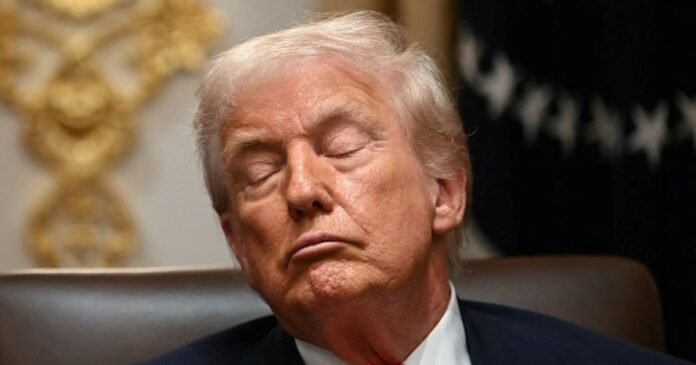
During a meeting at the White House earlier this year with executives from the fossil fuel industry, Trump diverted attention from the discussion to admire the view outside, displaying a lack of focus on governing matters. Instances have also been reported where Trump has fallen asleep during crucial meetings, sometimes in the presence of world leaders.
While occasional fatigue is common, repeated occurrences, coupled with growing irritability, incoherent speech, and apparent memory lapses, form a concerning pattern that cannot be dismissed as benign idiosyncrasies.
Physically, there are unsettling signs as well. Trump’s ankles frequently appear swollen, and his hands show frequent bruising. The White House has attributed the bruising to excessive handshaking and long-term aspirin use, while confirming a diagnosis of chronic venous insufficiency—a condition affecting blood flow common in older adults.
These indicators do not definitively prove mental decline. However, collectively, they underscore a fundamental truth that Trump previously highlighted about Biden: age and health are crucial, especially when dealing with nuclear responsibilities and global stability.
The current situation is particularly striking given Trump’s past behavior. While quick to criticize Biden for any signs of weakness, Trump now faces similar scrutiny and reacts defensively to inquiries about his own well-being. There is a growing perception that Trump’s temperament has shifted towards being more volatile, distracted, and prone to outbursts of anger.
His recent provocative statements, such as discussing seizing Greenland or disrupting alliances, no longer appear as calculated moves but rather impulsive reactions. When even friendly foreign leaders exit meetings with apprehension, it is reasonable to question what is happening. This is not about scoring political points or playing amateur psychologist; dementia is a serious issue that requires professional evaluation.
It is entirely justified and essential to inquire whether the individual holding the world’s most powerful office is exhibiting escalating signs of mental and physical strain. Trump once emphasized the importance of health and age in public figures. By his own standards, he is now subject to the same level of scrutiny.
The real danger lies in silence and avoidance of uncomfortable truths. If world leaders are already privately discussing Trump’s stability, the public deserves transparency. The world cannot afford to realize too late that the individual in charge was not as well as portrayed.
While Trump previously ridiculed Biden, the tables have turned, and the questions persist.